Showing posts with label Flowers. Show all posts

The Iris in Shakespeare

Iris germanica botanical print, Iris in Shakespeare
Tall Bearded Iris botanical print

"Who broils in loud applause, and make him fall
His crest that prouder than blue Iris bends."

- Troilus and Cressida, Act I, Scene 3

Today the Iris is a name given to a genus of about 300 different species, however the genus was only created in 1753 by the Swedish botanist Carl Linnaeus. During the 16th and 17th centuries a much smaller number of plants bore the name of Iris. Those familiar to an Elizabethan gardener would have included:
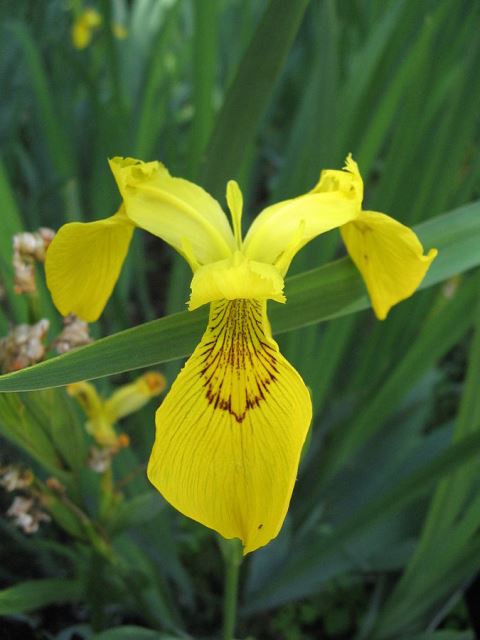
The Flower-de-luce or Fleur-de-lis

Iris pseudacorus, Yellow Iris, Flower-de-luce, Fleur-de-lis in Shakespeare
Yellow Iris by A. Barra  CC BY 3.0


" ... what sayest thou, my fair flower-de-luce"

- Henry V, Act V, Scene 2

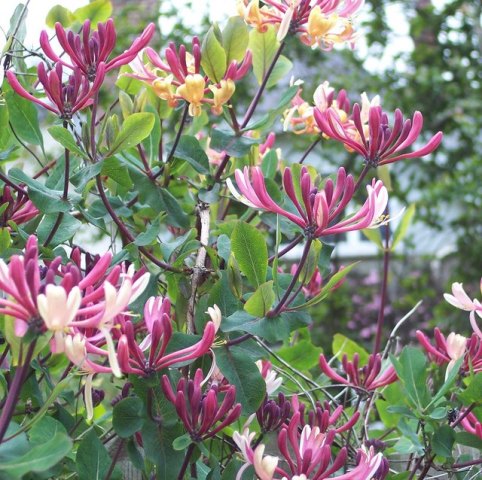
Honeysuckle (Lonicera periclymenum)

Honeysuckle (Lonicera periclymenum) Shakespeare plantlore
Honeysuckle by Trish Steel, CC BY-SA 2.0, via Wikimedia Commons


"And bid her steal into the pleached bower,
Where honeysuckles, ripen'd by the sun
Forbid the sun to enter."

- Much Ado About Nothing, Act III, Scene 1

Harebells and Bluebells


English Bluebell (Hyacinthoides non-scripta), Shakespeare flower
English Bluebell (Hyacinthoides non-scripta)
"I'll sweeten thy sad grave: thou shalt not lack
The flower that's like thy face, pale primrose, nor
The azured hare-bell, like thy veins."

- Cymbeline, Act IV, Scene 2


There is some debate as to what wildflower Shakespeare is referring to when he speaks of "the azured hare-bell". Some argue that he is referring to the English Bluebell (Hyacinthoides non-scripta), sometimes called the English Wild Hyacinth (Scilla nutans). However he may also be referring to the Campanula rotundifolia, which rather confusingly is also called the Harebell and Bluebell in different parts of the British Isles. 

Lilies in Shakespeare

Lily (Lilium candidum)


Lily (Lilium candidum), Madonna Lilly, Shakespeare Lily, Shakespeare garden


"To gild refilded gold, to paint the lily
...
Is wasteful and ridiculous excess."

- King John, Act IV, Scene 2


Ophelia's Flowers

Ophelia's flowers and garland
Ophelia by Alexandre Cabanel, 1883

Ophelia's Bouquet

  
"There’s rosemary, that’s for remembrance. 
 Pray you, love, remember.
 And there is pansies, that’s for thoughts ...
There’s fennel for you, and columbines.
There’s rue for you, and here’s some for me. 
We may call it “herb of grace” o' Sundays.
- Oh, you must wear your rue with a difference.
There’s a daisy. I would give you some violets, 
But they withered all when my father died."

- Hamlet, Act IV, Scene 5


Herbs for a Shakespeare Garden

Here is a list of herbs to include in a Shakespeare garden. Not only are they beautiful and fragrant they are also very useful, practical plants to grow. Add them to stews, soups and salads, or use them as the Elizabethan's did and make your own Strewings, Nosegays and beauty salves. You could even create your own Shakespeare fragrance or perfume.

Herbs for a Shakespeare garden include: Lavender, Mint, Savory, Marjoram, Marigold, Wild Thyme, Chamomile, Parsley, Rosemary and Fennel.


"Here's flowers for you:
Hot lavender, mints, savory and marjoram"

- The Winter's Tale, Act IV, Scene 4

Lavender (Lavandula angustifolia)

 
Lavender herb for a Shakespeare garden


Daisies and Pansies

The Daisy and Pansy are two flowers that are associated with Ophelia in Hamlet. Learn more about their meaning and symbolism and other places where Shakespeare used them in his work.

Daisy (Bellis perennis)


Daisy, a Shakespeare flower
Source: André Karwath, distributed under a CC-2.0 license


“When daisies pied, and violets blue,
And lady-smocks all silver white,
And cuckoo-buds of yellow hue,
Do paint the meadows with delight,”

- Love’s Labour’s Lost, Act V, Scene 2


Carnations and Lady Smocks

Carnations and Lady Smocks, two delicate spring and summer flowers that add beauty and colour to a Shakespeare garden.

Carnation (Dianthus caryophyllus)


carnations for a Shakespeare garden
Source: www.flickr.com/photos/mrhayata/494923616


“… the fairest flowers o’ the season
Are our Carnations and streak’d Gillyvors”

 - The Winter’s Tale, Act IV, Scene 3

Violets in Shakespeare

Violets are a beautiful, sweet smelling flower. Traditionally violets represented faithfulness but for Shakespeare they were also symbolic of sorrow and death.

Violet (Viola odorata)


Violets in Shakespeare, flower symbolism


Primroses, Cowslips and Oxlips

These spring flowers all belong to the Primula family and they appear frequently in Shakespeare's works.

Primrose (Primula vulgaris) 


Primroses for a Shakespeare Garden

“And In the wood, where often you and I
Upon faint primrose-beds were wont to lie.”

- A Midsummer Night’s Dream, Act I, Scene I

Elizabethan Nosegays

Nonsuch Palace by Joris Hoefnagel, Elizabethan flowers, Tudor flowers, nosegays, tussie-mussie, medieval, middle ages
Nonsuch Palace by Joris Hoefnagel

A garden “shall contain the herbs and flowers used to make nosegays and garlands.”

The Country Farme, 1600

Nosegays or Tussie-Mussies are small bouquets of flowers and herbs that were attached to lady's bodices and to gentleman’s doublet or mantle. The term nosegay is derived from the Middle English gay, meaning bright object or ornament or gay in the sense of happiness or joy, literally meaning an ornament that brings joy to the nose. The word Tussie Mussie or tusemose is first mentioned in 1440 and is derived from the word tuse meaning knot of flowers and mose referring to the damp moss that was wrapped around the stems to prevent the flowers from drying out. (Tussie-Mussies: The Language of Flowers, Geraldine Adamich Laufer)


Shakespeare Fragrances and Perfumes

Here are a few ideas on how to create your own Shakespeare inspired fragrance, with the herbal oils and flower essences that are associated with a play or with an individual character. Let's start with the tragic heroine Ophelia.

ophelia scent, ophelia incense, shakespeare incense
Ophelia by Ernest Hébert


How To Plant A Shakespeare Garden

Anne Hathaway's Cottage Garden, How To Plant a Shakespeare Garden
Anne Hathaway's Cottage Garden by Richard Peat CC BY-SA 2

In his collected works Shakespeare refers to over two hundred species of plants, with twenty-nine scenes taking place in gardens or in orchards. Shakespeare’s references to flowers and plants not only gave his plays a sense of place, like the Arden forest in As You Like It, the fairy forest of A Midsummer Night’s Dream or the rugged Scottish landscape of Macbeth. They also served as extended metaphors for human emotions and the human condition.

To honour the talents of the Bard why not create a Shakespeare inspired garden. Here are a few ideas on the how to do so.

Elizabethan Gardens

The Elizabethan garden followed in the tradition of the early medieval garden in that it was both functional and decorative. It provided food and medicine for the household as well as herbs and flowers for floor strewing and cloth dying.  The medieval garden also had a separate area for pleasure or for religious contemplation. It was referred to as a Hortus Conclusus, Latin for enclosed garden, or a Pleasaunce, a garden of delight. The Pleasaunce was a small secluded area for recreation, as Esther Singleton remarks in her book The Shakespeare Garden, it was literally a place of re-creation, a place to renew the body and refresh the mind and spirit.

Shakespeare Roses

roses, shakespeare flowers, shakespeare quotes, shakespeare garden
Credit: www.flickr.com/photos/summerbl4ck/2690402593

"Of all flowers
Methinks a rose is best." 

- Two Noble Kinsmen, Act II, Scene II

The Sweet o' the Year - Daffodils


Daffodil one of Shakespeare's flowers from The Winters Tale
Credit: www.flickr.com/photos/roadhunter/5527224


“When daffodils begin to peer, -
With heigh! The doxy over the dale, -
Why, then comes the sweet o’ the year”

- The Winter’s Tale, Act IV, Scene 2